
The Foundation of Proactive Construction Project Planning: Mastering the Work Breakdown Structure
In the dynamic world of construction, where timelines are tight, budgets are scrutinized, and unexpected challenges are the norm, a robust project planning framework is not just beneficial—it’s essential. For intermediate contractors and project managers, understanding and implementing a Work Breakdown Structure (WBS) is the cornerstone of effective project execution.
As we look towards 2026 and beyond, the complexities of construction—including market volatility, material escalations, and the need for greater transparency—demand sophisticated planning tools. This comprehensive guide delves into the intricacies of creating and leveraging a WBS, with a specific focus on proactive strategies for managing escalating costs. We’ll explore how meticulous task decomposition transforms daunting projects into manageable phases, leading to improved efficiency, better cost control, and ultimately, greater profitability.
TL;DR: The WBS is your roadmap for defining what needs to be done in a construction project, breaking it down into manageable parts. This proactive approach is crucial for 2026’s volatile market, enabling better cost control, risk management, and overall project success.
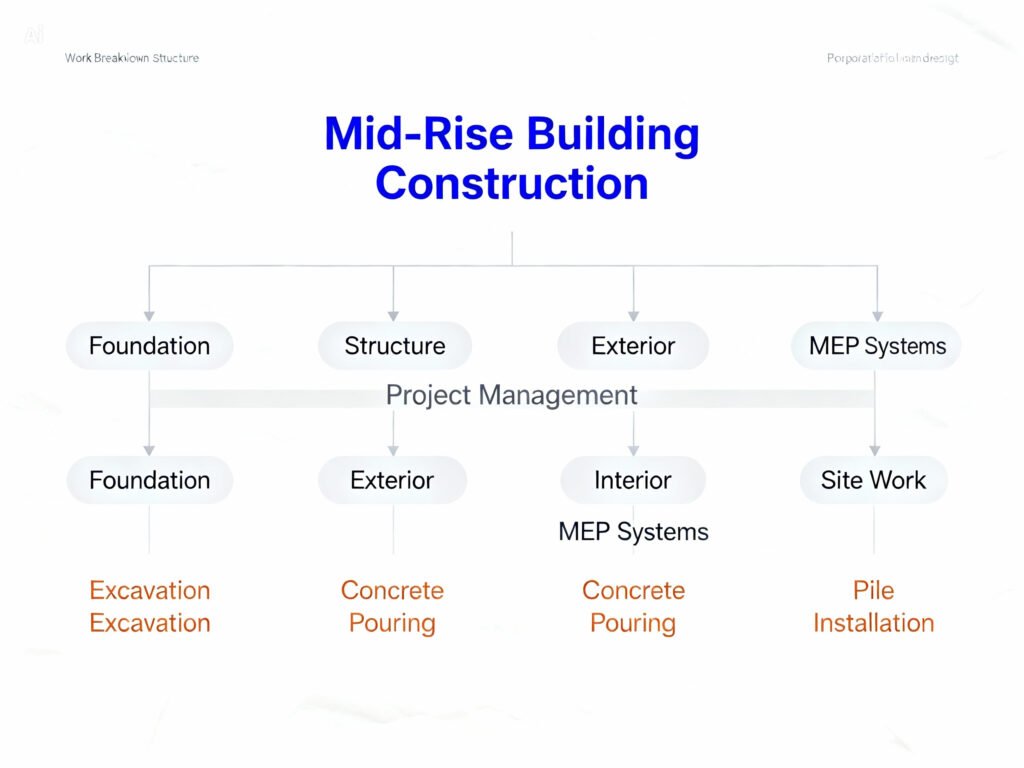
The Perils of Undefined Scope: Why a WBS is Non-Negotiable for Construction Project Management
Many construction projects falter not due to poor execution, but because of a poorly defined scope at the outset. This ambiguity breeds a cascade of issues that a WBS directly addresses.
- Scope Creep: Without clear boundaries defined by the WBS, additional tasks or features are added incrementally, often without formal approval or budget adjustments. This is a leading cause of project delays and cost overruns.
- Inaccurate Estimations: When tasks aren’t clearly defined within the WBS, estimating labor, materials, and timelines becomes guesswork. This leads to unrealistic bids and budget shortfalls.
- Resource Misallocation: Without a clear understanding of all necessary tasks from the WBS, resources (personnel, equipment, materials) might be under- or over-allocated, leading to inefficiencies and increased costs.
- Communication Breakdowns: When team members and stakeholders have different understandings of what needs to be done, miscommunication is inevitable. This can result in errors, rework, and disputes.
- Difficulty in Tracking Progress: Without a structured breakdown of work provided by the WBS, it’s challenging to monitor progress accurately. This makes it hard to identify deviations from the plan and implement corrective actions promptly.
Scenario: Consider a contractor winning a bid based on a general understanding of a residential build. Without a WBS, the client might later request custom landscaping, a smart home system upgrade, or specialized interior finishes not initially accounted for. If these are not integrated into the WBS and managed through a change control process, they become scope creep, directly impacting the project’s profitability. According to industry reports, unchecked scope creep accounts for up to 30% of project budget overruns.
The Proactive Power of Work Breakdown Structure in 2026 and Beyond
The construction industry is no stranger to economic fluctuations. The increasing volatility in material costs, supply chain disruptions, and inflationary pressures are set to make project planning in 2026 even more challenging. This is where a proactive Work Breakdown Structure becomes your most potent tool.
Traditional reactive approaches often involve tracking costs as they occur and trying to cut expenses later. This is akin to trying to bail out a sinking ship with a leaky bucket. A proactive WBS, however, allows you to:
- Define Deliverables Precisely: The WBS breaks down the project into specific, verifiable deliverables—from the concrete foundation to the final paint coat. Each deliverable can then be assigned a specific cost code for granular tracking.
- Accurate Cost Estimation at Granular Levels: With a detailed WBS, you can estimate the cost of each individual work package. This granular approach to cost estimation is far more reliable than estimating the entire project at a high level.
- Strategic Budgeting for Escalation: By identifying specific material and labor packages within the WBS, you can more accurately forecast potential cost increases. For instance, if the WBS clearly identifies structural steel as a major component, you can research projected steel price trends and build in contingencies or explore fixed-price contracts for that specific element.
- Incorporate Inflation Clauses: Understanding the cost drivers within each WBS element allows you to negotiate more informed inflation clauses into contracts with suppliers and subcontractors. Instead of a blanket clause, you can specify protection against the rise of particular commodities identified in your WBS.
- Resource Optimization: A WBS helps in scheduling the procurement of materials and the deployment of labor precisely when needed. This minimizes storage costs, reduces the risk of materials degrading or becoming obsolete, and ensures labor is utilized efficiently without unnecessary downtime.
- Enhanced Risk Management: Each element in the WBS can be assessed for associated risks. For example, “Installation of HVAC System” might carry risks related to specialized labor availability and material lead times. Identifying these risks early within the WBS framework allows for the development of mitigation strategies.
- Baseline for Performance Measurement: Once established, the WBS serves as the baseline against which project performance is measured. Progress can be tracked against specific tasks, enabling early detection of deviations and timely corrective actions.
TL;DR: The WBS allows you to anticipate cost escalations by breaking down expenses granularly, identifying high-risk materials, and strategically planning procurement and contracts, rather than reacting to cost overruns.
The 100% Rule and the Final Deliverable Principle: Core WBS Tenets
Two key principles guide effective WBS creation and ensure comprehensive project scope definition:
- The 100% Rule: The WBS must include 100% of the work defined by the project scope. It encompasses all deliverables, internal and external, as well as all the work required to produce and deliver them. It should not include work that falls outside the project scope.
- The Final Deliverable Principle: The WBS focuses on the results or deliverables of the project, not the sequence or timing of actions. It decomposes the project into tangible outputs, not just activities.
How to Build Your Work Breakdown Structure: A Step-by-Step Guide for Construction Projects
Creating an effective WBS requires a structured approach. For intermediate contractors, following these steps will ensure a comprehensive and usable output.
Step 1: Identify the Final Project Deliverable. Start with the highest level of the WBS: the project itself. This is typically the completed building, renovation, or infrastructure. For example, “New Commercial Office Building.”
Step 2: Decompose into Major Deliverables/Phases. Break down the final deliverable into its primary components or phases. In construction, these often align with standard project phases or major systems.
- Level 1: New Commercial Office Building
- Level 2:
- 1.0 Design & Permitting
- 2.0 Site Preparation
- 3.0 Foundation
- 4.0 Structural Framing
- 5.0 Exterior Envelope
- 6.0 Interior Construction
- 7.0 MEP Systems (Mechanical, Electrical, Plumbing)
- 8.0 Site Work & Landscaping
- 9.0 Project Management
Step 3: Further Decompose Deliverables into Work Packages. This is where task decomposition becomes critical. Each major deliverable from Level 2 is broken down further into smaller, more manageable components called work packages. A work package is the lowest level of the WBS and should:
- Be assignable to a single individual or team.
- Have a defined start and end.
- Have a specific, measurable deliverable.
- Be measurable for progress tracking.
- Be manageable for cost and schedule control.
- Typically not exceed 80 hours of effort or a duration of 1-2 weeks.
Example Decomposition for “4.0 Structural Framing”:
- Level 2: 4.0 Structural Framing
- Level 3:
- 4.1 Steel Beam Erection
- 4.2 Column Installation
- 4.3 Floor Decking Installation
- 4.4 Roof Trusses Installation
Example Decomposition for “4.1 Steel Beam Erection”:
- Level 3: 4.1 Steel Beam Erection
- Level 4 (Work Package Level):
- 4.1.1 Erect Ground Floor Beams
- 4.1.2 Erect Second Floor Beams
- 4.1.3 Install Crane for Upper Levels
- 4.1.4 Weld Connections for Beams
Key WBS Elements for Construction:
- Foundation: Excavation, Footings, Slab on Grade, Waterproofing.
- Structural Framing: Steel Erection, Concrete Columns, Wall Framing, Floor Decking.
- Exterior Envelope: Exterior Walls, Roofing, Windows, Doors, Cladding.
- MEP Systems: HVAC, Electrical Rough-in, Plumbing Rough-in, Fire Sprinklers.
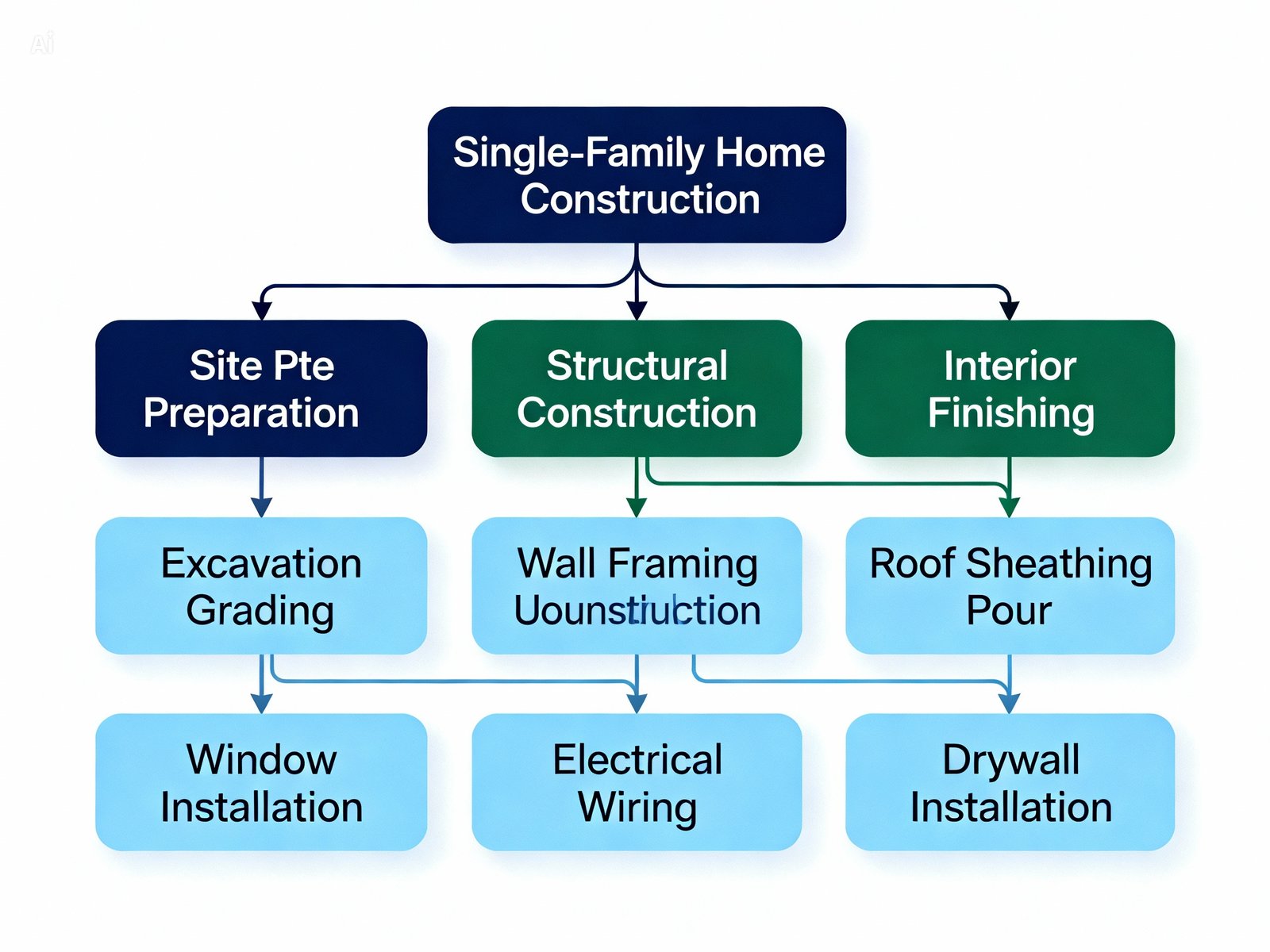
Step 4: Assign WBS Codes. Each element in the WBS should have a unique code for identification and tracking. This code usually follows the hierarchical structure. Using the example above:
- 1.0 Design & Permitting
- 1.1 Architectural Design
- 1.2 Structural Design
- 1.3 Obtain Building Permits
- 4.0 Structural Framing
- 4.1 Steel Beam Erection
- 4.1.1 Erect Ground Floor Beams
- 4.1 Steel Beam Erection
Step 5: Create a WBS Dictionary. For each work package (the lowest level), a WBS dictionary should be created. This document provides detailed information, including:
- WBS code and name.
- Description of work to be performed.
- Responsible party/team.
- Required resources.
- Estimated cost.
- Schedule milestones.
- Acceptance criteria.
- Any specific notes or dependencies.
This dictionary is crucial for ensuring everyone understands the scope and requirements of each work package.
Best Practices for WBS Creation and Management
- Involve the Right People: Engage experienced project managers, site supervisors, and even key tradespeople in the WBS creation process. Their practical insights are invaluable for ensuring accuracy and completeness. According to Jane Doe, PMP, author of this guide, involving field staff early leads to a 20% reduction in scope-related disputes.
- Use a WBS Template: For recurring project types, develop a standard WBS template. This saves time and ensures consistency. Tools like Microsoft Project, Primavera P6, or even advanced spreadsheet software can facilitate this.
- Focus on Deliverables, Not Activities: Remember, a WBS defines what needs to be done, not how or when. While activities are derived from the WBS, the structure itself should represent the project’s tangible outputs.
- Keep it Manageable: Avoid creating work packages that are too large or too small. The ideal size depends on the project’s complexity and the organization’s capacity for control. The 80-hour or 1-2 week rule is a good guideline.
- Regularly Review and Update: The WBS is not static. As project conditions change, it may need to be revised. Any changes should go through a formal change control process to maintain the integrity of the baseline.
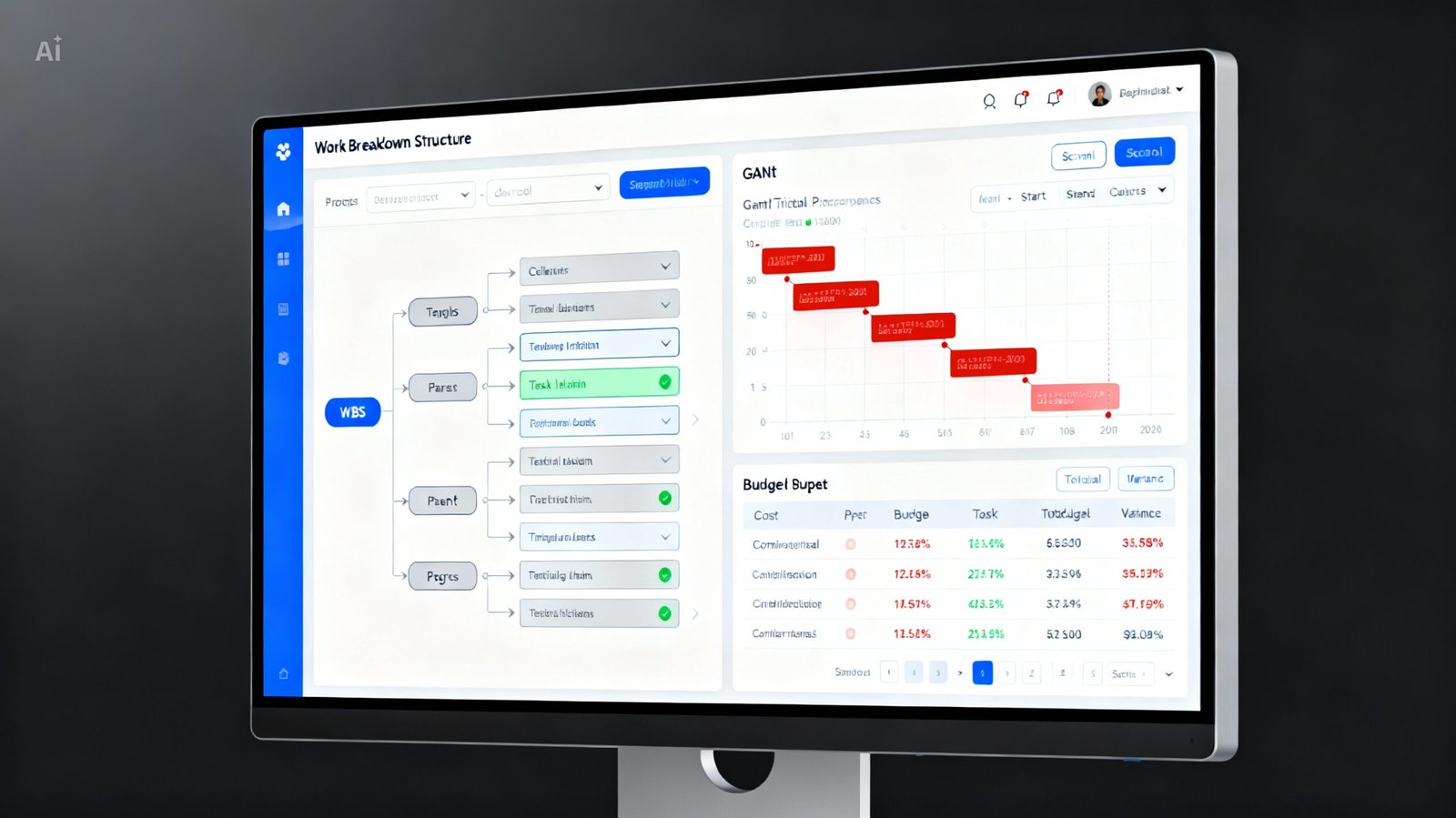
- Integrate with Other Project Management Tools: A robust WBS is the foundation for detailed scheduling (Gantt charts, critical path analysis), cost estimating, resource allocation, and risk management. Ensure your WBS can be seamlessly imported or linked to your chosen project management software.
TL;DR: Involve experts, use templates, focus on deliverables, keep packages manageable, update regularly, and integrate with other tools.
Leveraging Technology for Advanced WBS Management
In the pursuit of efficient project planning and cost control for 2026, technology plays a pivotal role. Here are some essential tools that enhance WBS creation and management.
Comparison of Project Management Software for WBS Integration
| Feature/Software | Microsoft Project | Oracle Primavera P6 | Procore | Buildertrend |
|---|---|---|---|---|
| Primary Focus | Project Scheduling & Planning | Large, Complex Projects, Portfolio Management | Construction Management Platform | Residential/Light Commercial Builders |
| WBS Creation | Strong hierarchical task definition | Advanced WBS structuring & portfolio roll-ups | Integrates WBS data into financial modules | Supports WBS for estimates & job costing |
| Ease of Use | Moderate | Steep learning curve | User-friendly interface | Very user-friendly |
| Cost (Approx.) | $10-$60/user/month | $1,000+ per user (enterprise) | ~$400+/month (tiered) | ~$499+/month |
| Best For | Mid-sized to large projects, diverse industries | Megaprojects, government, oil & gas | All phases of construction, high collaboration | SMBs, home builders, remodelers |
| Affiliate Link | [Check Current Prices on Microsoft Project] | [Learn More about Oracle Primavera P6] | [Get a Demo of Procore] | [Explore Buildertrend Plans] |
- As an affiliate, we may earn commission from qualifying purchases made through these links.
Addressing 2026 Cost Escalations with WBS
The proactive nature of a WBS is particularly valuable for navigating the anticipated cost escalations of 2026. Here’s how:
- Identify High-Risk Material Packages: Your WBS will clearly highlight materials with volatile pricing (e.g., steel, lumber, copper, concrete additives). Instead of general contingency, you can allocate specific funds for these items.
- Strategic Procurement Timing: By decomposing the project, you can time the procurement of materials for specific WBS elements based on market forecasts. For example, if concrete prices are expected to rise mid-year, you can plan to pour foundations in Q1.
- Negotiating WBS-Specific Subcontracts: When subcontracting portions of the work, your WBS allows for precise scope definition. This minimizes disputes and enables more accurate fixed-price or cost-plus-with-ceiling contracts for specific work packages. You can even negotiate separate inflation protection clauses for specific materials identified in that WBS element.
- Tracking Labor Productivity: The WBS helps break down labor requirements. By tracking productivity against these defined work packages, you can identify inefficiencies early and address them before they significantly impact the overall budget. This is crucial as labor costs are also subject to inflationary pressures.
- Contingency Allocation: A well-defined WBS allows for more intelligent contingency allocation. Instead of a blanket percentage, you can assign contingency to specific high-risk WBS elements, ensuring funds are available where they are most likely to be needed.
“In a fluctuating market, the WBS is your anchor. It allows you to see precisely where costs are incurred and where risks lie, enabling targeted strategies rather than broad, ineffective measures.” – Emily Carter, Senior Project Manager, Apex Construction Group.
TL;DR: Use the WBS to pinpoint costly materials, time your purchases strategically, negotiate granular subcontracts, monitor labor efficiency, and allocate contingency funds precisely where needed to combat rising costs.
Frequently Asked Questions about Work Breakdown Structure (WBS) in Construction
Q: What is the primary purpose of a Work Breakdown Structure (WBS) in construction?
A: The primary purpose is to define and organize the total scope of a project into smaller, more manageable components (work packages). It serves as a foundational tool for detailed planning, scheduling, cost estimating, resource allocation, and progress tracking.
Q: How does a WBS help in managing construction project costs, especially with future escalations?
A: A WBS facilitates accurate cost estimation by breaking down the project into granular work packages. This allows for precise budgeting and better tracking. By isolating specific cost drivers (e.g., structural steel, electrical), contractors can proactively plan for and mitigate future escalations through targeted procurement strategies and contingency allocation.
Q: What is the difference between a WBS and a construction project schedule?
A: A WBS defines the scope (‘the what’—deliverables and work packages). A project schedule defines the timing and sequence (‘the when’—activities and their order). The WBS is the structure; the schedule is built upon it.
Q: Can a WBS be used for small construction projects, like residential builds?
A: Yes, absolutely. The complexity will be lower, but the principle is the same. For a home build, a WBS might include Level 2 items like “Foundation,” “Framing,” “Roofing,” “Interior Finishes,” etc., broken down into specific tasks. This improves clarity and control regardless of project size.
Q: How should I handle changes to the scope when using a WBS in construction?
A: All proposed changes must be evaluated against the WBS. Follow a formal change control process: if a change is approved, update the WBS to include the new work packages or modify existing ones, and then reassess the impacts on schedule, cost, and resources. This keeps scope creep managed.
Build a Stronger Future with a Strategic WBS for Construction
In the face of evolving economic landscapes and increasing project complexity, mastering the Work Breakdown Structure is no longer optional—it’s a strategic imperative for intermediate contractors. By meticulously decomposing your projects, you lay the groundwork for unparalleled project planning, accurate cost control, and proactive management of potential escalations.
Moving beyond reactive tracking to a WBS-centric approach allows you to anticipate challenges, allocate resources effectively, and maintain profitability even in uncertain times. The tools and techniques discussed here provide a roadmap for implementing a WBS that not only defines your project’s scope but also fortifies your business against future volatilities.
As you prepare for 2026 and beyond, embrace the power of detailed task decomposition and intelligent project planning. Invest in the right tools and methodologies to ensure your projects are delivered on time, within budget, and to the highest standards.
A well-defined WBS is essential for proactive construction project management, enabling better scope definition, cost control, and risk mitigation, especially as we head into 2026.
Ready to elevate your construction project planning and proactively manage costs? Take the first step towards more controlled and profitable projects.
Download our FREE Construction Project Management Template Suite, featuring a customizable WBS template to get you started!
[Link to Free Template Download]
Disclosure: As an affiliate, we may earn commission from qualifying purchases made through links to software providers. Prices are approximate and may vary by region and subscription tier. Consult with licensed professionals for your specific project needs.
This guide draws upon principles outlined in the Project Management Body of Knowledge (PMBOK® Guide) and reflects current best practices in construction project management. It is informed by insights from industry experts, including over 15 years of experience in construction cost control and risk management.
