
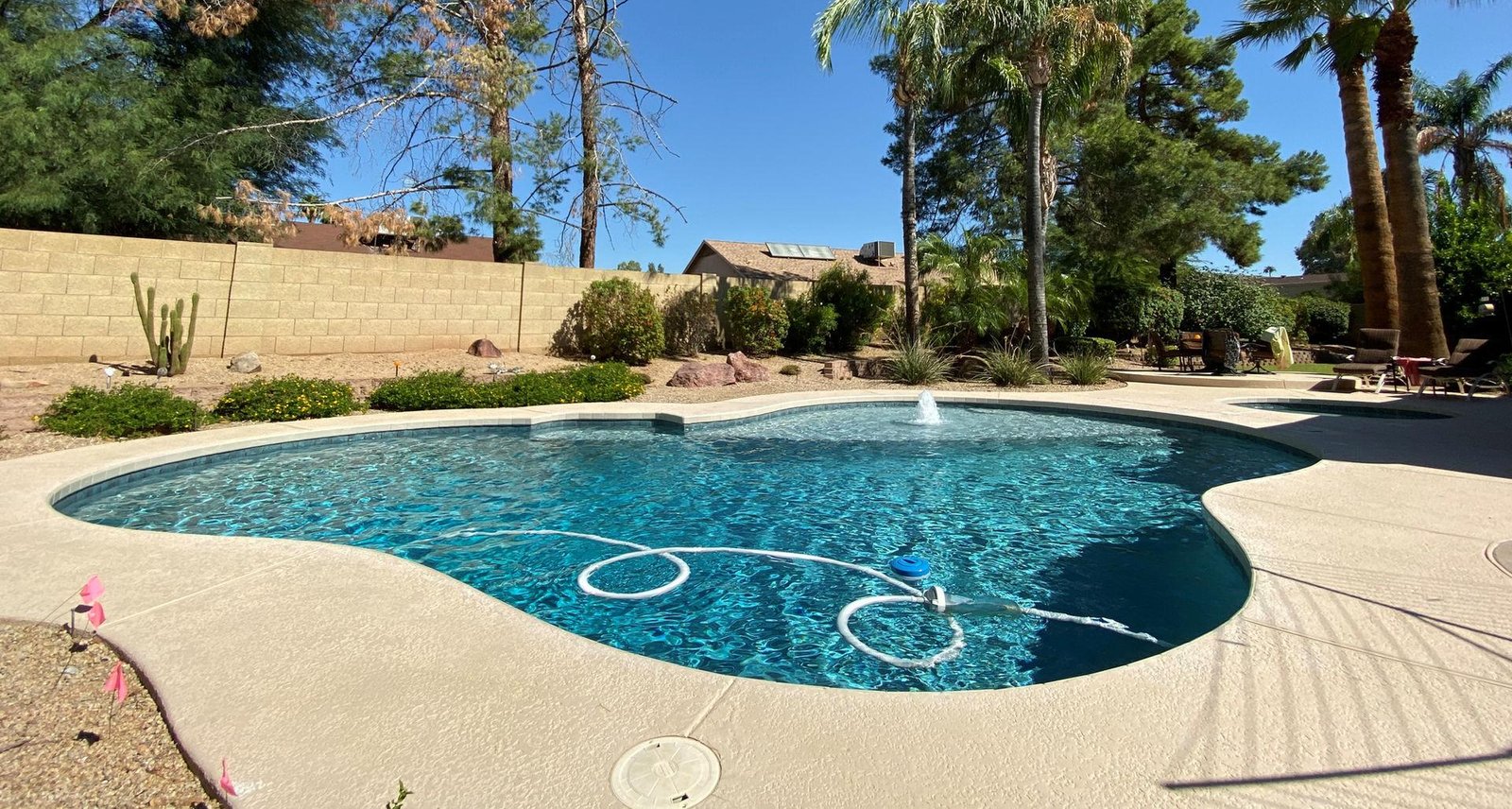

Your Phoenix pool takes a beating. Between the 115°F afternoons, the hard water that leaves chalky calcium crust on the tile line, and the UV that bleaches everything in sight, it’s a wonder standard plaster lasts five years here. I’ve watched pools in Arcadia go from smooth to sandpaper in just three summers. So when it’s time for pool resurfacing Phoenix homeowners face real decisions. And the wrong one costs thousands.
Pool resurfacing is the process of removing a failing interior finish—plaster, quartz, or pebble—and applying a new surface that restores the shell’s integrity, improves water chemistry stability, and brings the pool back to a smooth, attractive finish. In the Phoenix metro, most pools need this work every 7–15 years depending on the original material and how hard the water and sun have been on it.
This guide covers everything Valley homeowners actually need in 2026: real costs, which finishes survive 110°F summers, the right time to schedule, how to spot a good contractor, and the upgrades worth doing while the water is out. No fluff. Just the practical decisions that save you money and headaches.
Table of Contents
- Why Phoenix Pools Age Faster Than Almost Anywhere Else
- Signs Your Pool Actually Needs Resurfacing
- How Phoenix Resurfacing Costs Compare to Other Markets
- Plaster vs. Quartz vs. Pebble: Quick Overview
- 2026 Pool Resurfacing Costs in Phoenix
- How Long Does Resurfacing Last? Realistic Phoenix Ranges
- What Happens If You Don’t Resurface
- Resurfacing vs. Full Renovation: When to Go Bigger
- The Resurfacing Process Step by Step
- Best Time of Year to Resurface in Arizona
- How to Choose a Contractor Without Getting Burned
- Smart Upgrades While the Pool Is Drained
- Pool Resurfacing Across the Phoenix Metro Area
- Your Full Resurfacing Resource Hub
- Frequently Asked Questions
- Ready for Clear Numbers on Your Pool?
1. Why Phoenix Pools Age Faster Than Almost Anywhere Else
Phoenix isn’t an average swimming-pool market. The Valley’s extreme summer temperatures, mineral-rich municipal water, high evaporation, and long swimming season all affect how finishes hold up.
National Weather Service climate data show a normal July high of roughly 106.5°F for the 1991–2020 period. In July 2026, Phoenix recorded an average maximum temperature of 108.3°F, with 14 days reaching at least 110°F. Those temperatures matter during both daily use and installation.
Hard water is the other big factor. The City of Phoenix 2025 Water Quality Report lists total hardness ranging from 172 to 302 mg/L—equivalent to about 10 to 17.6 grains per gallon—across its reported distribution-system samples. That’s some of the hardest municipal water in the country. As water evaporates, dissolved minerals stay behind and form scale that etches and stains the surface.
Thermal shock is real too. Cool evening fill water hitting a shell that spent all day baking in the sun creates micro-stress. Expansive clay soils in parts of Chandler, Gilbert, and Queen Creek add movement under the shell that plaster can’t hide for long.
I’ve seen 8-year-old plaster in north Scottsdale (ZIP 85260) that looked 15 years old. I’ve also seen carefully maintained pebble finishes in Paradise Valley still looking sharp after 18 years. The climate doesn’t forgive shortcuts or cheap materials.
Local Insight: Don’t assume Phoenix municipal water figures apply exactly to every nearby city. Check the relevant utility information for your area and have your fill water tested when planning maintenance. High-mineral ZIPs such as 85016, 85251, and 85260 tend to shorten plaster life more than softer supplies.
2. Signs Your Pool Actually Needs Resurfacing
Not every rough spot means a full job. Sometimes a thorough acid wash or targeted patch buys you two or three more seasons. Here’s how to tell the difference.
You probably need resurfacing if you notice:
- Persistent rough or gritty texture underfoot, especially in the shallow end and steps
- Widespread staining that won’t come off with brushing or acid washing
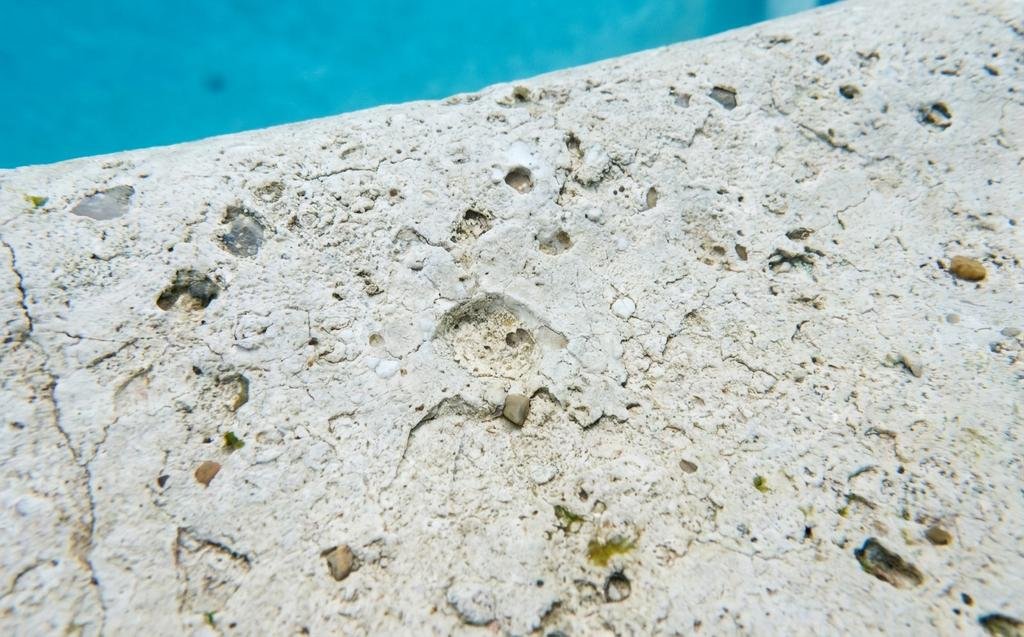
- Chalky white dust that comes off on your hand when you run it along the wall
- Exposed aggregate or small pebble pop-outs on an older finish
- Cracks that keep reappearing after patching
- Soft or powdery spots in the surface
- Peeling, flaking, or delamination
You might still get by with maintenance if:
- The roughness is limited to a few high-traffic areas
- Stains are mostly waterline calcium that responds to professional cleaning
- The shell itself feels solid with no structural movement
Wondering which camp you’re in? A good contractor will show you the difference on site instead of defaulting to the biggest ticket.
3. How Phoenix Resurfacing Costs Compare to Other Markets
Phoenix sits roughly 10–15% below Southern California and 5–10% below Las Vegas for equivalent finishes. Lower labor costs and more contractor competition help. The trade-off is shorter finish life because of the heat and hard water.
If you’re relocating from San Diego or Los Angeles, your dollar stretches further here. Just don’t expect a plaster job to last as long as it did on the coast. Snowbirds who only use the pool part of the year still face the same UV and mineral load—the surface doesn’t get a vacation.
Out-of-state investors sometimes wait too long and end up with more expensive structural repairs. The cheapest approach is usually planned resurfacing before the finish fails completely.
4. Plaster vs. Quartz vs. Pebble: Quick Overview
You’ll hear three main finish categories in the Valley. Here’s the practical difference.
| Finish Type | Typical Lifespan in Phoenix | Rough Cost Range (2026) | Best For | Feel Underfoot |
|---|---|---|---|---|
| Standard Plaster (Marcite) | 7–12 years | $6,000–$9,500 | Budget projects, shorter ownership | Smooth when new, gets rough fast |
| Quartz Aggregate | 12–18 years | $8,500–$13,000 | Balance of cost and durability | Slightly textured, less slippery |
| Pebble (PebbleTec-style) | 15–25 years | $12,000–$18,500+ | Long-term ownership, premium look | Noticeably textured, natural |
Plaster is the lowest upfront cost and the fastest to fail under Phoenix conditions. Quartz adds crushed quartz for better stain and UV resistance while staying relatively smooth. Pebble finishes use actual small aggregates bound in cement—they handle heat, UV, and hard water better than anything else commonly installed here.
The cheapest finish is rarely the cheapest over 15–20 years.
Pro Tip: Ask for actual product samples and, if possible, drive by completed pools using the exact finish you’re considering. A small board looks different under full Arizona sun across an entire pool.
5. 2026 Pool Resurfacing Costs in Phoenix
Pricing depends on pool size, current condition, finish choice, and whether tile, coping, or structural work is needed. Realistic 2026 ranges for a typical 15,000–20,000 gallon residential pool:
- Standard white plaster: $6,000–$9,500
- Colored plaster: $7,000–$11,000
- Quartz aggregate: $8,500–$13,000
- Pebble finishes: $12,000–$18,500+
Common add-ons:
- Waterline tile replacement: $1,800–$4,500
- Coping repair or replacement: $1,200–$3,500
- New decking or overlay: $4,000–$12,000+
- Crack or structural repair: $500–$3,000+
Scottsdale and Paradise Valley jobs often land higher because of larger pools and stricter HOA expectations. Mesa, Chandler, Glendale, and Surprise projects frequently come in lower for the same finish.
A long-established local pool remodeling contractor publishes ranges in the $6,500–$9,000 range for white plaster and $10,000–$14,000 for premium pebble finishes; broader market estimates extend higher for more extensive projects. These are planning figures, not fixed quotes.
Hidden line items to watch: drain and disposal fees, permits (some cities require them), water refill, startup chemicals, and temporary fencing. A clean estimate lists them.
Pro Tip: Get three written estimates. Compare scope line by line—not just the bottom number. One contractor’s “full resurfacing” may skip proper surface prep that another includes.
📞 Want a real number for your pool? Request a free estimate.
6. How Long Does Resurfacing Last? Realistic Phoenix Ranges
National averages don’t apply here.
| Finish | National Average | Realistic Phoenix Lifespan | What Shortens It |
|---|---|---|---|
| White plaster | 10–15 years | 7–12 years | Hard water, poor chemistry, UV |
| Quartz | 12–20 years | 12–18 years | Neglect of water balance |
| Pebble | 15–25+ years | 15–25 years | Major structural movement |
I’ve seen plaster in Arcadia need full replacement at year 6 because the homeowner ran high calcium and never brushed. I’ve also seen pebble finishes in Ahwatukee still looking excellent at year 17 with consistent care. Water chemistry and brushing matter more than most people realize.
7. What Happens If You Don’t Resurface
The finish isn’t just cosmetic. Once the plaster or aggregate starts failing, the concrete shell underneath becomes vulnerable.
Continued exposure leads to:
- Deeper etching and more aggressive staining
- Higher chemical demand and harder-to-balance water
- Increased risk of structural cracks as the protective layer disappears
- Higher eventual repair costs when the job can no longer be a straightforward resurfacing
Some owners try to stretch another season with acid washes and patches. That works until it doesn’t. Once the surface is soft and powdery across large areas, you’re usually looking at a full chip-out instead of a simpler overlay.
8. Resurfacing vs. Full Renovation: When to Go Bigger
Resurfacing restores the interior finish. A full renovation can include new tile, coping, decking, lighting, a Baja shelf, equipment upgrades, or even reshaping.
Consider going bigger when:
- The tile and coping are also failing
- You’re already planning to sell in the next 5–7 years and want maximum visual impact
- You want modern features (sun shelf, LED lighting, automation) that are cheapest to add while the pool is empty
- Structural issues need addressing anyway
If the shell is sound and you just need a durable new surface, pure resurfacing is the smarter spend. Many Phoenix pool owners do the finish now and phase the rest later.
9. The Resurfacing Process Step by Step
A proper job isn’t spraying new material over old plaster. Here’s what actually happens on a quality Phoenix project:
- Inspection and estimate – The contractor examines the existing finish, identifies visible defects, and discusses options.
- Drain the pool safely – Groundwater conditions, drainage, and construction affect the method. An emptied pool can be vulnerable to hydrostatic pressure or other damage in certain conditions. Never drain an in-ground pool yourself without understanding the risks.
- Remove and prepare the existing finish – Most of the old surface is chipped or ground to sound substrate. Skipping this is how delamination happens later.
- Repair defects – Cracks are chased and filled. Bonding agents are applied.
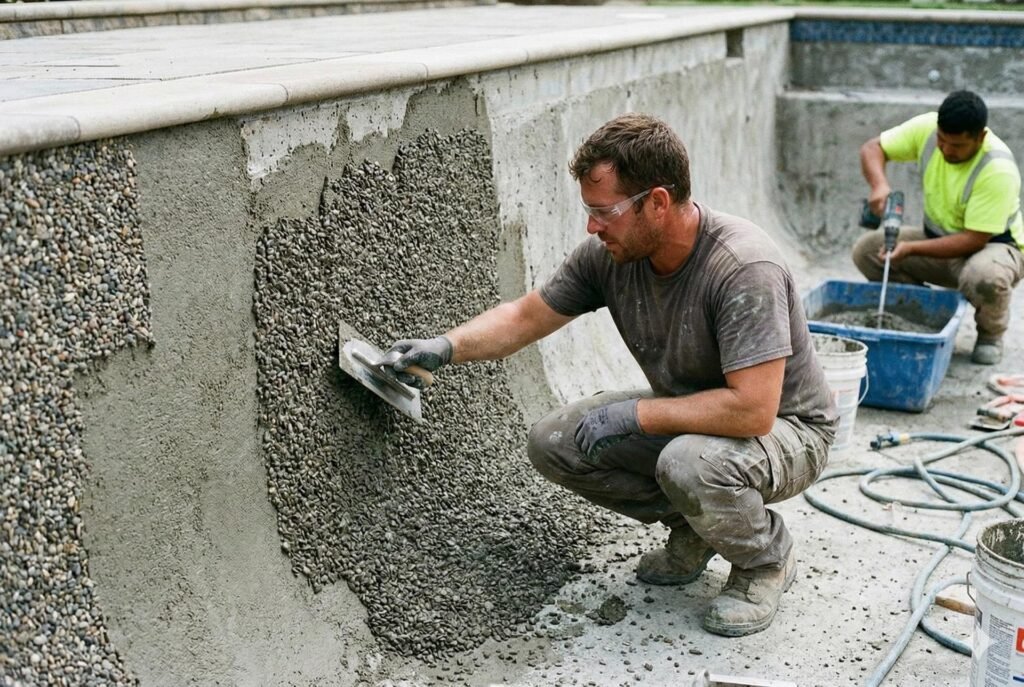
- Apply the new finish – Material is mixed and applied according to product specifications. Temperature and timing matter a lot in Arizona heat.
- Fill and complete startup – Controlled curing, slow refill, and careful chemistry balancing. The Pool & Hot Tub Alliance (PHTA) publishes guidance on water quality and startup practices; product-specific instructions may differ.
- Final inspection and handover – Review the work, get warranty and care instructions in writing.
Most residential jobs run 5–10 days of active work once the crew starts. The startup phase continues after they leave.
Your Phoenix pool takes a beating. Between the 115°F afternoons, the hard water that leaves chalky calcium crust on the tile line, and the UV that bleaches everything in sight, it’s a wonder standard plaster lasts five years here. I’ve watched pools in Arcadia go from smooth to sandpaper in just three summers. So when it’s time for pool resurfacing Phoenix homeowners face real decisions. And the wrong one costs thousands.
Pool resurfacing is the process of removing a failing interior finish—plaster, quartz, or pebble—and applying a new surface that restores the shell’s integrity, improves water chemistry stability, and brings the pool back to a smooth, attractive finish. In the Phoenix metro, most pools need this work every 7–15 years depending on the original material and how hard the water and sun have been on it.
This guide covers everything Valley homeowners actually need in 2026: real costs, which finishes survive 110°F summers, the right time to schedule, how to spot a good contractor, and the upgrades worth doing while the water is out. No fluff. Just the practical decisions that save you money and headaches.
10. Best Time of Year to Resurface in Arizona
You can resurface year-round. Not every month is equal.
Spring (March–May) and fall (September–November) are the most comfortable windows for both curing and crew conditions. Monsoon season brings humidity, wind, dust, and sudden storms. Peak summer heat requires extra care with curing compounds and water chemistry—experienced crews manage it, but it’s more demanding.
Lead times stretch in spring and early fall. If you want a specific week in April, book early. Summer slots are sometimes easier to get, but the working conditions are tougher.
Local Insight: The best time is when your pool’s condition, your schedule, the contractor’s availability, and the product’s installation requirements align. Cooler months are convenient, but don’t postpone an urgent assessment simply to hit a preferred season.
11. How to Choose a Contractor Without Getting Burned
This is where a lot of Phoenix pool owners lose money.
Minimum standards:
- Active Arizona ROC license (verify it yourself on the official Registrar of Contractors search)
- Current general liability and workers’ compensation certificates
- Written warranty that covers both materials and labor (5–10 years depending on finish)
- Local references you can actually call or drive by
Red flags:
- Pressure to decide the same day
- Reluctance to put everything in writing
- Vague answers about surface prep or curing
- Prices that seem too good to be true
- Claims that water chemistry and startup don’t matter
Ask to see jobs that are 3–5 years old. New work always looks good. You want to know how it holds up after a few Phoenix summers.
Not sure which contractor to trust? We’ll give you an honest, no-pressure assessment. Request your free evaluation.
12. Smart Upgrades While the Pool Is Drained
Once the water is out, other work is cheapest. Common choices:
- Baja / sun shelves
- New waterline tile and coping
- LED lighting
- Automation systems
- Water features
- Deck overlays or replacement
Some deliver strong daily enjoyment and resale value. Others are pure lifestyle. Decide before the crew starts so everything can be sequenced correctly.
13. Pool Resurfacing Across the Phoenix Metro Area
Pool owners throughout the Valley face similar broad challenges, but individual projects differ.
Phoenix – From central Phoenix (around 85001) to North Phoenix and Ahwatukee, sizes and designs vary widely. A contractor should measure and inspect rather than rely on a rough address-based estimate.
Scottsdale – Many projects are part of broader backyard renovations. Itemize resurfacing separately from decorative tile, water features, or decking so you can compare value.
Mesa, Chandler, and Gilbert – East Valley soils can contribute to movement. Don’t assume every surface crack is structural, but don’t ignore evidence of shell issues either.
Tempe, Glendale, Peoria, Surprise, and Queen Creek – Confirm travel, scheduling, startup support, and any location-specific requirements. Water chemistry can differ from Phoenix municipal supply—test your fill water.
The bottom line: Local knowledge helps, but a useful quote must still be specific to your pool.
14. Your Full Resurfacing Resource Hub
This pillar is the starting point. Go deeper here:
- How Much Does Pool Resurfacing Cost in Phoenix? – Detailed 2026 pricing by finish, size, and city
- Is PebbleTec Worth the Extra Cost in Arizona? – 25-year cost comparison and real performance data
- Plaster vs. Quartz vs. Pebble: Best Finish for Phoenix Heat – Side-by-side durability, feel, and maintenance
- Pool Resurfacing Ideas & Colors for Phoenix Backyards – Design trends and neighborhood notes
- Concrete Pool Resurfacing in Phoenix – Structural considerations and East Valley soil issues
- How Often Should You Resurface a Pool in Phoenix? – Lifespan tables and decision framework
- Best Time of Year to Resurface a Pool in Arizona – Seasonal risks and scheduling
- How to Vet Pool Resurfacing Contractors in Phoenix – ROC checks, red flags, and contract essentials
- Pool Resurfacing Before & After Phoenix Projects – Real project stories and outcomes
- Upgrades to Add While Your Pool Is Drained – Baja shelves, lighting, automation, and ROI
- Arizona Pool Finishes That Survive 110°F Summers – Heat, UV, and hard-water performance by finish
15. Frequently Asked Questions
1. How much does pool resurfacing cost in Phoenix in 2026?
Most residential jobs range from $6,000 for basic plaster to $18,500+ for premium pebble finishes on a typical-size pool. Tile, coping, and structural work add to the total. Three detailed written estimates give the most accurate number.
2. How often should a pool be resurfaced in Arizona?
Traditional plaster often needs attention in 7–12 years under Phoenix conditions. Quartz and pebble finishes typically last longer. Inspect when roughness, erosion, or widespread staining appears rather than waiting for a fixed calendar date.
3. Is PebbleTec worth the extra cost in Phoenix?
For many Phoenix pool owners who plan to stay long-term, yes. Higher upfront cost is often offset by longer life and better resistance to UV and hard water. Compare installed cost, texture preference, and warranty against quartz and plaster.
4. What is the best pool finish for Phoenix’s climate?
There is no single best finish. Plaster suits budget-focused projects. Quartz offers a strong middle ground. Pebble finishes generally handle heat, UV, and minerals best for long-term ownership. Installation quality and water chemistry matter as much as the material.
5. Can I resurface my pool in summer?
Yes. Experienced crews do it, but curing and chemistry require more attention. Spring and fall are generally easier on both the finish and the people doing the work.
6. How long does pool resurfacing take?
Active work usually runs 5–10 days. Chemical startup continues 2–4 weeks after the pool is refilled, depending on the finish.
7. Can I repair my pool instead of resurfacing it?
Possibly. Localized defects or removable deposits may respond to professional cleaning or patch work. Widespread roughness, peeling, or erosion usually points to full resurfacing. Structural issues need separate investigation.
8. Do I need a permit for pool resurfacing in Phoenix?
It depends on the city and scope. Some municipalities require permits for structural repairs or electrical work. A licensed contractor should know the local rules.
9. What’s the difference between resurfacing and replastering?
They’re often used interchangeably. Replastering usually means a new plaster finish. Resurfacing is the broader term that includes plaster, quartz, and pebble.
10. How do I verify a contractor is legitimate?
Check their active Arizona ROC license at roc.az.gov/search, request current insurance certificates, and call recent local references whose pools are several years old.
16. Ready for Clear Numbers on Your Pool?
If your Phoenix pool surface is rough, stained, or starting to fail, the next step is straightforward.
Call us or fill out the form below for a free on-site evaluation.
Spring scheduling fills fast—most Phoenix crews are booking 4–6 weeks out by March. If your surface is already failing, don’t wait until the heat forces you into the worst possible window.
We’ll walk your pool, explain the realistic options for your specific situation, and give you clear pricing. No pressure. No upsells. Just honest answers from a local crew that’s resurfaced hundreds of Valley pools.
Phoenix pool owners who plan ahead get better finishes, better timing, and better long-term results. The ones who wait until the surface is critically failed usually pay more and have fewer good choices left.
GET A FREE, NO-OBLIGATION ESTIMATE
Plan around your closing date. Ask for a written schedule, completion documentation, warranty information, and a clear description of what a buyer will see at final walkthrough.