
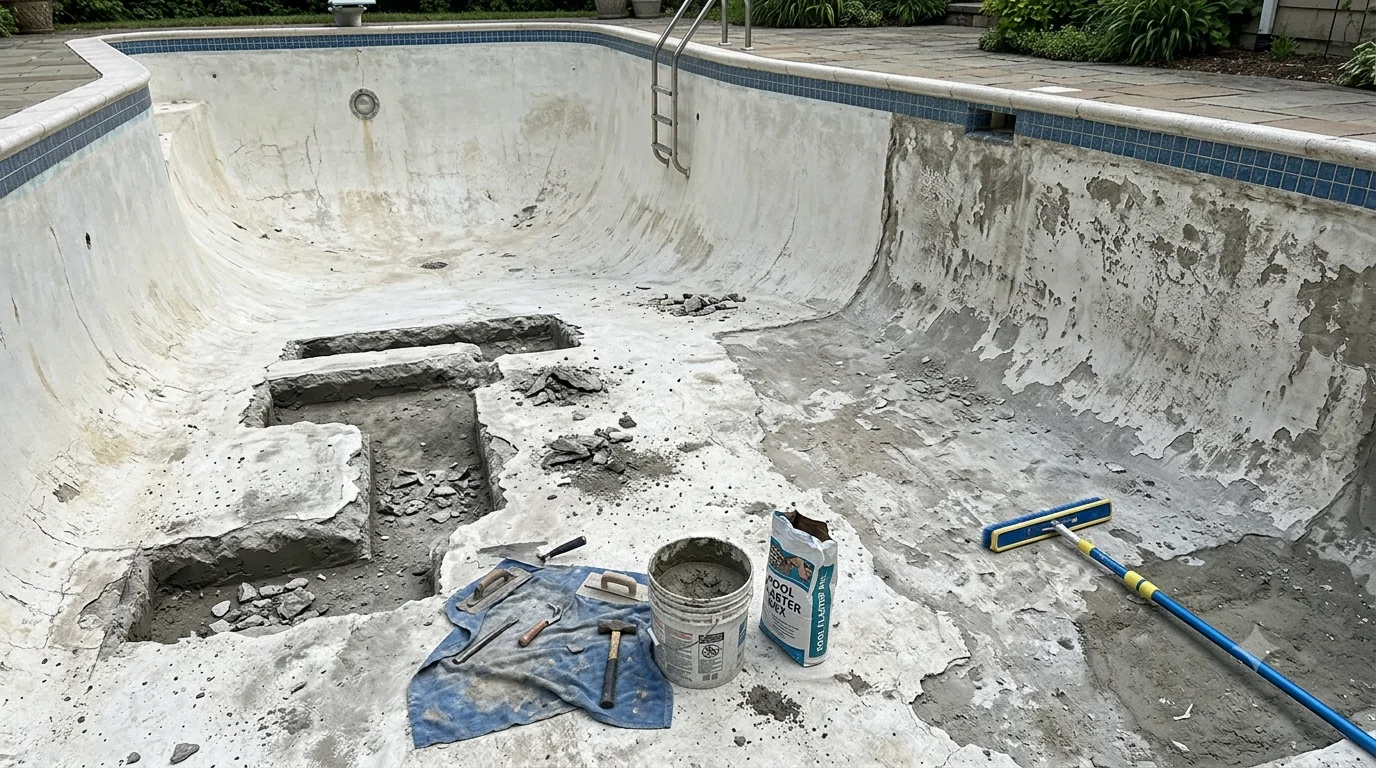

A hairline mark across plaster in Queen Creek may be a surface crack; a widening line accompanied by unexplained water loss deserves a different response. Desert soils vary across the Phoenix metro: caliche and expansive clay occur in some areas, and moisture shifts can affect ground conditions, but a map or neighborhood name cannot diagnose a particular pool shell. Photograph the crack, track its changes and have a qualified professional inspect the structure before covering it with a new finish.
Record the Pattern and Related Symptoms
Note whether the line follows a fitting, step, corner or broad floor area. Check for displaced tile, deck separation, recurring patches or changes in water level. Evaporation is common in Arizona, so use a controlled bucket comparison or professional leak test rather than assuming a crack explains every drop.
- Take dated photos with a ruler for scale.
- Record refill frequency and equipment operating conditions.
- Ask whether the crack is in the finish, bond coat or structural shell.
Repair the Cause, Not Just the Appearance
Resurfacing can conceal a surface defect temporarily but will not stabilize a moving shell or repair a leaking line. Ask for a written diagnosis, proposed repair method and any engineer or leak-specialist referral needed. Caliche or clay conditions should be evaluated at the actual site.
Arrange an Inspection in the Valley
For a Queen Creek or Gilbert pool, compare repair and resurface options only after the cause is clear. Keep the photos and test results with the contractor’s scope and warranty documentation. Request a Phoenix Valley site review to confirm scope and next steps.
GET A FREE, NO-OBLIGATION ESTIMATE
Plan around your closing date. Ask for a written schedule, completion documentation, warranty information, and a clear description of what a buyer will see at final walkthrough.